March 17, 2026
Before a single room was sketched, Pernille Lind and Richy Almond did something most designers wouldn’t bill for: they just walked.
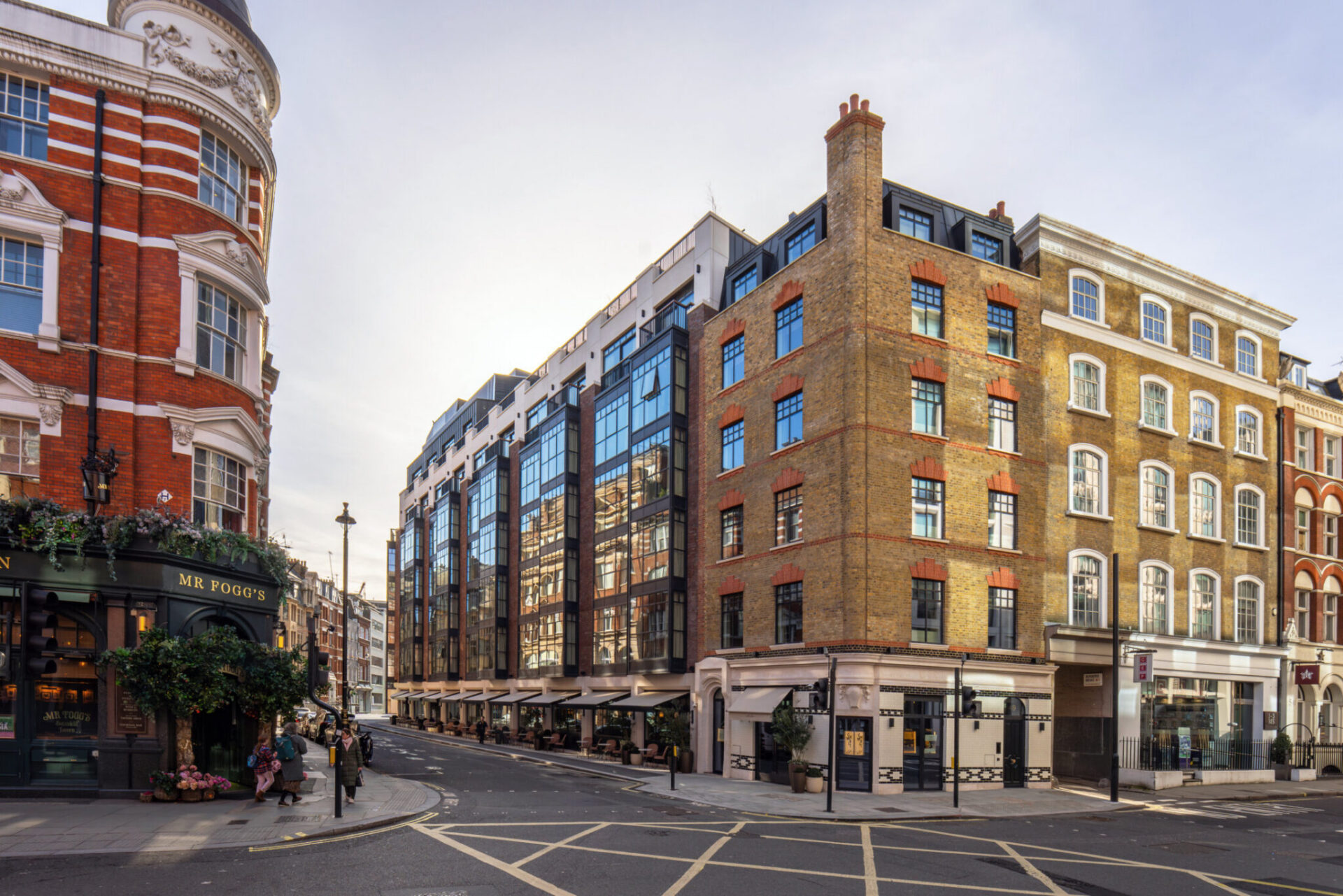
The founders of London-based interior design studio Lind + Almond didn’t approach The Newman project with a mood board or a Pinterest folder. They began on foot through the Georgian terraces of Newman Street, past the polished brass fittings of Charlotte Street’s restaurants, beneath the Art Deco flourishes of buildings that some might walk past without a second glance. Fitzrovia, they quickly understood, wasn’t a backdrop for the hotel. It was the brief.
The Neighbourhood Wrote the Spec
There’s a particular quality to Fitzrovia’s streets that rewards the observant. It’s a neighbourhood that has quietly accumulated layers: Georgian proportions softened by Edwardian additions, Art Deco detailing on buildings that now house creative studios, cobbled mews tucked behind busy thoroughfares. For Lind + Almond, reading these layers was the first step in their design process.
The bathroom sinks are perhaps the subtlest example of this: their graceful curves echo the nearby Shropshire House, an Art Deco landmark whose geometry has presided over the neighbourhood for nearly a century. The geometric tiling draws its cues from the Gem Langham Court Hotel, another local building whose patterned surfaces have been hiding in plain sight. These aren’t design references plucked from an archive, they’re in-situ details, ready to catch the eye of those who know where to look.
The Crittal windows that frame views across the neighbourhood carry this same logic. Their grid structure became a design signature across the hotel: a formal, almost architectural discipline that runs through everything from the spatial planning to the printed materials; the designers letting the building itself take the lead.
A Muse Called Nancy
Every strong design story has a human heart, and at The Newman, that heart belongs to Nancy Cunard.
For those who don’t already know her: Cunard was a poet, publisher, and bohemian who moved through 1920s London, and Fitzrovia in particular, with an energy that was impossible to ignore. She was bold, unconventional, and adorned; photographs from the era show her stacked in bangles from wrist to elbow, wearing her jewellery like armour or art, depending on the day.
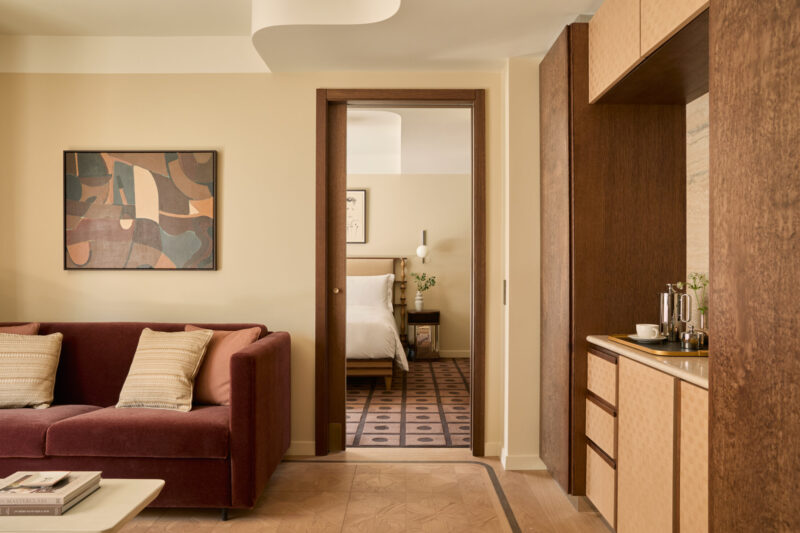
Lind + Almond chose her not as a decorative motif, but as a key part of their design philosophy. Her boldness gave them permission to be playful without being frivolous; her layers, both literal and metaphorical, became a guiding principle for the rooms. Look closely at the sculptural bedposts in your room and you’ll find that their forms echo Cunard’s famous bangles. The patterned floors carry a quiet nod to her love of polka dots. These details don’t require explanation, they simply exist, as she would have wanted, confidently, without apology.
What makes this approach so well-suited to The Newman is that Cunard wasn’t just an interesting historical figure. She was Fitzrovian in spirit: unconventional, creative, deeply committed to the neighbourhood. Lind + Almond’s decision to build the hotel’s character around her is also, in a sense, a decision to let Fitzrovia speak for itself.
Swedish Grace and Wellbeing
Our wellness floor at The Newman — home to the sauna, steam room, ice lounge, halotherapy room, hydrotherapy pool, and experience showers — draws its visual language from the Swedish Grace design movement of the 1920s.
Swedish Grace was a design school that understood something important: that simplicity and warmth don’t have to contradict eachother. Clean lines, natural materials, and a restrained palette could produce interiors that felt genuinely inviting rather than austere. In this movement, Lind + Almond found a counterpoint to the Nancy Cunard energy upstairs, something quieter and more contemplative, but equally specific in its references.
Textile designer Marta Fjetterstöm, a celebrated figure of the era, provided the inspiration here. Warm oak, bronze, textured coloured glass, antique brass, and walnut run through the space — materials that age well and improve with attention, much like the neighbourhood itself. The result is a wellness floor that feels like a retreat, all within keeping of the hotel’s main character.
What You’ll Discover
In the Classic, Superior, and Deluxe rooms, Rory Langdon-Down’s commissioned photography lines the corridors and lift lobbies: portraits of Fitzrovia’s actual residents, shot over a year of walking the same streets that Lind + Almond explore as they crafted their initial plans. Ryugo the fashion design student, Dilly the photographer, Abdullah the cobbler running the neighbourhood’s oldest family business — these faces are the hotel’s art collection, an acknowledgment that the neighbourhood’s character belongs to the people who make it.
The Penthouse Suite’s 130-square-metre terrace, with its dining table for eight and private KLAFS Talo outdoor sauna, sits above it all, but the design logic that runs from street level up is consistent: specific, warm, layered, and Fitzrovian to the last detail.
Design as Belonging
The word that Lind + Almond were given in their brief, and the one that runs most clearly through the finished hotel, is belonging. A hotel that belongs to Fitzrovia, rather than simply exists here.
That distinction is harder to achieve than it sounds. It requires a willingness to listen before jumping in, to walk the streets before designing the rooms, to look at the buildings before choosing the tiles, to understand the neighbourhood’s human history before deciding whose spirit should animate its interiors.
At The Newman, every room tells a story of this city. A specific and quietly extraordinary version that reveals itself to anyone who looks close enough. Ready and waiting for you to discover during your next stay.