March 20, 2026
George Orwell drank here. Virginia Woolf walked these streets. Fitzrovia has always attracted people with something to say, and the good sense not to shout it.
That’s what makes it different from the parts of London that announce themselves. Soho performs. Mayfair preens. Fitzrovia just gets on with it, quietly accumulating writers, artists, broadcasters, architects and now, for those in the know, one of the city’s more interesting new hotels.
A neighbourhood with a literary history
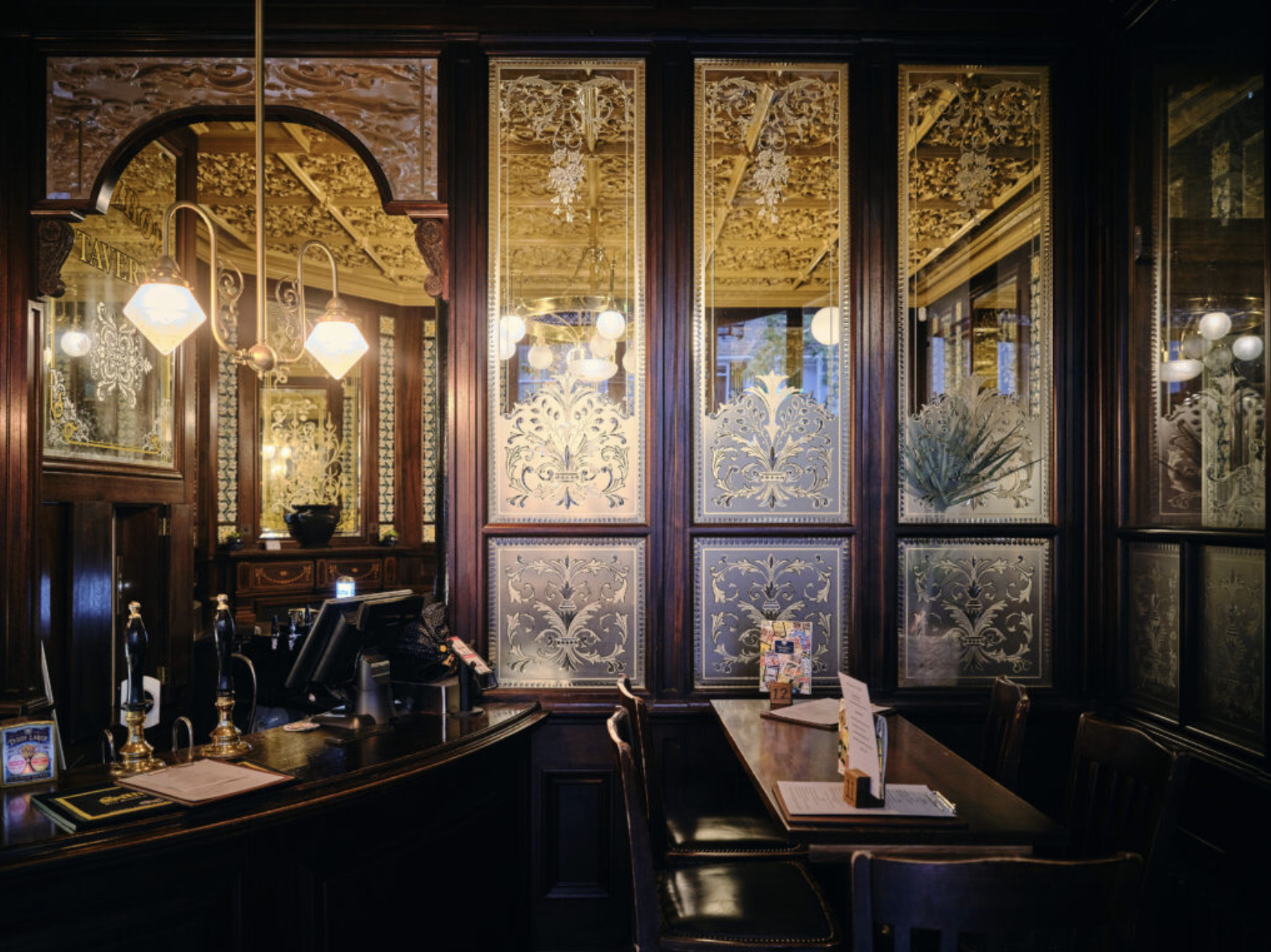
From the mid-1920s onwards, Fitzrovia became a gathering point for London’s bohemian set. The Fitzroy Tavern on Charlotte Street was the headquarters: novelist George Orwell, poet Dylan Thomas, painter Nina Hamnett, and artist Augustus John all drank there at various points, the pub a living room for London’s creative underclass.
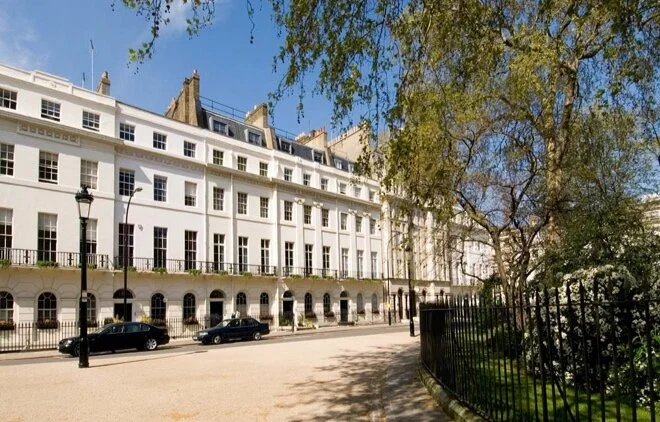
Virginia Woolf lived at 29 Fitzroy Square, where her writing found its voice among those Georgian terraces and hidden mews. Playwright George Bernard Shaw had an address here. Walter Sickert’s circle gathered nearby, their studios feeding a constant exchange of ideas between the visual arts and the written word. And, more recently, writer Ian McEwan later set his novel Saturday in these streets, layering fiction onto a neighbourhood already vibrant with stories.
Walk through Fitzroy Square on a Tuesday afternoon and you’ll feel it: something in the scale of the buildings, the particular quiet of the garden, the sense that this is a place people have always come to think and be inspired.
The BBC, the studios, and the creatives who followed
Fitzrovia’s bohemian era gave way, gradually, to something more institutional, but no less creative. The BBC built its home here in the 1930s. Broadcasting House on Portland Place brought writers, producers, journalists and actors, and the neighbourhood absorbed them the way it absorbs everyone: with minimal fuss and a warm welcome at a decent pub nearby.
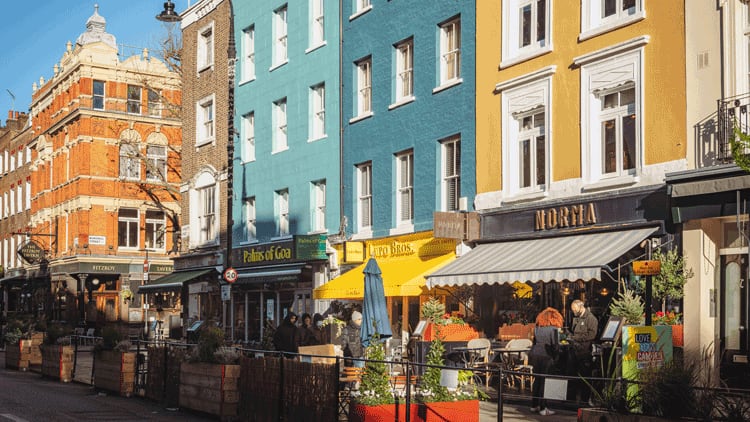
Today, advertising agencies, architecture practices, design studios and production companies fill the floors above the neighbourhood’s restaurants and shops. Charlotte Street remains the social artery, lunch tables occupied by people arguing about concepts, pitches, briefs. The creative energy that Orwell and Woolf brought to these streets never really left. It just changed clothes.
Where The Newman fits in to all of this
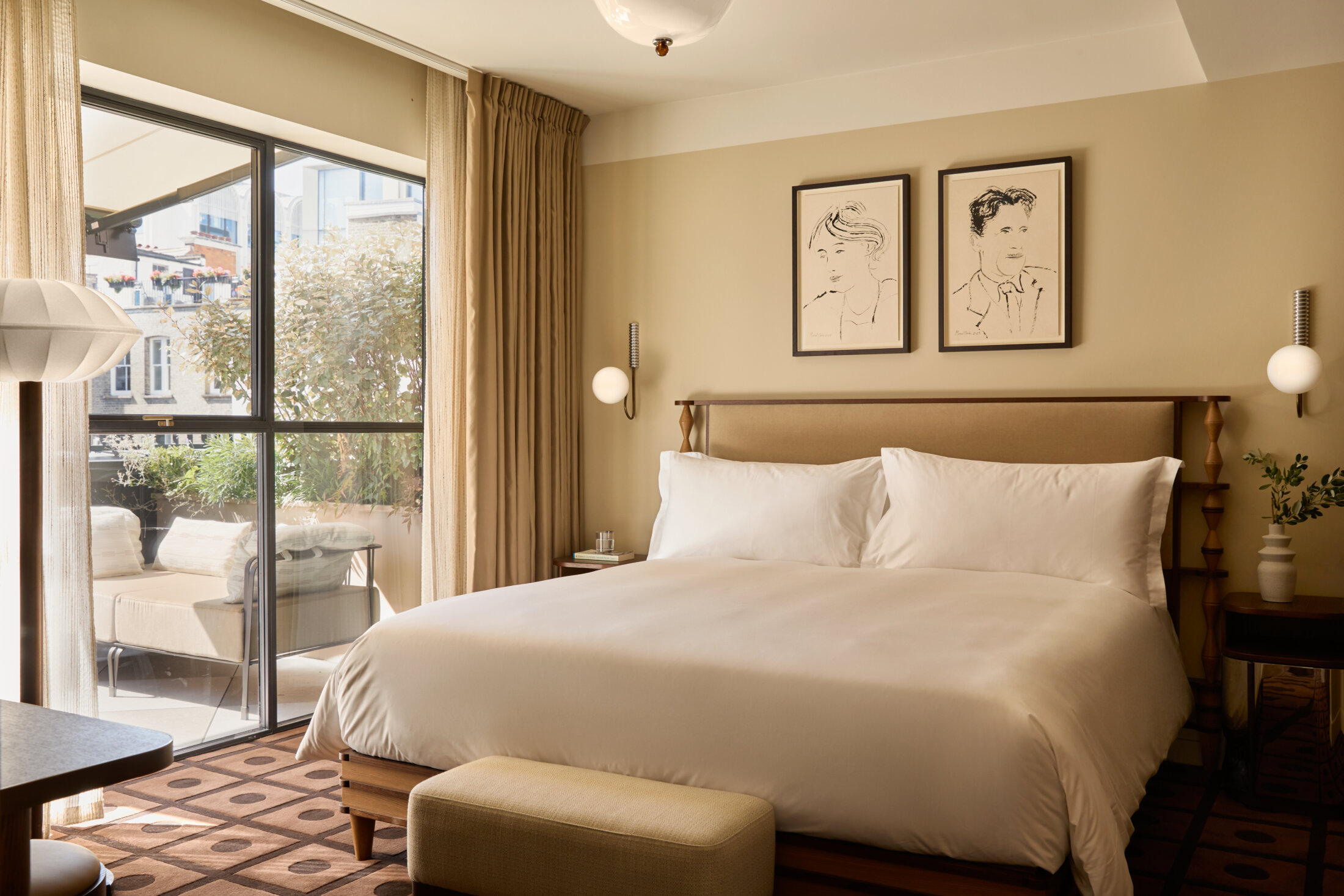
On Newman Street, ours is a hotel that feels like it has always been here.
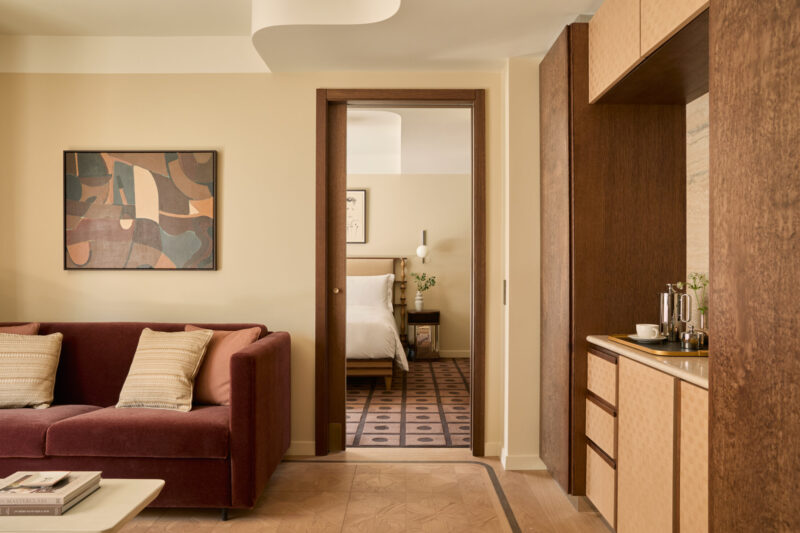
The interiors draw on two threads: Fitzrovia’s creative past and the Swedish Grace Movement of the 1920s, a design sensibility that valued clean lines and natural materials, warmth without clutter. Commissioned artworks throughout the hotel reference this rich literary history, alongside a photographic portrait series of the area’s current creatives, residents and regulars.
What to do while you’re here
Start at Fitzroy Square: the garden is open to the public and the Georgian terraces give a great sense of what this area looked like when Woolf lived among them. From there, the BT Tower is a short walk north, still one of the stranger sights in central London, unchanged since 1964 and better for it. And Kaffeine on Great Titchfield Street is worth swinging by for coffee.
Charlotte Street is for eating. The stretch running south through Fitzrovia has more serious restaurants per block than most London postcodes: Clipstone for quietly accomplished modern cooking, The Ninth for Michelin-starred Mediterranean. There’s our all-day Brasserie Angelica, where live-fire cooking meets fresh seasonal ingredients; while the basement Gambit bar makes cocktails with precision. The Fitzroy Tavern is still on Charlotte Street too, and still a pub in the best sense.
For something quieter, stroll over to the Fitzrovia Chapel on Pearson Square, a Byzantine-inspired former hospital chapel and one of central London’s least-visited beautiful spaces.
Why Fitzrovia, and why now
Fitzrovia has never been the loudest neighbourhood in London. It sits at the centre of the West End, Marylebone to the north, Mayfair to the west, Soho to the south, Bloomsbury to the east, but is completely distinct from them all. That independence has always attracted people who are as unique and free-spirited as the area itself.
Goodge Street station is a short walk from The Newman, and Tottenham Court Road is close by. But more than a base to explore London from, it’s what Fitzrovia offers that’s special: a neighbourhood that has spent a century cultivating a creative community that’s still the driving force of its day to day.
We look forward to introducing you to them all next time you’re here.